Imagine walking into your home and having it respond to your every whim—lights dimming to your favorite movie scene, the thermostat adjusting to your ideal temperature, and your playlist starting just as you kick off your shoes. Welcome to the world of wireless home integration, where technology isn’t just smart; it’s downright charming.
Overview Of Wireless Home Integration
Wireless home integration employs various technologies to connect devices throughout a residence. Smart devices communicate seamlessly, allowing homeowners to control lighting, security, and climate via smartphones or voice commands. Homes equipped with sensors enhance convenience by adjusting settings based on user activity.
Temperature control systems play a pivotal role in optimizing energy efficiency. Smart thermostats learn household routines, adjusting temperatures accordingly, and can reduce energy costs by up to 10 to 15 percent. Lighting systems respond to user preferences, enabling automation that enhances mood and efficiency.
Security systems offer real-time alerts and remote monitoring. Homeowners can receive notifications when unusual activity occurs or manage surveillance cameras from anywhere. Integration extends to appliances as well, with smart refrigerators and ovens providing features like inventory tracking and remote preheating.
Entertainment systems also benefit from wireless integration. Speakers and televisions can connect to a centralized hub, allowing users to enjoy audio and video content effortlessly. Voice assistants manage various tasks, enhancing the overall smart home experience.
Wireless integration significantly improves accessibility for all users. Individuals with mobility limitations gain independence by controlling devices remotely. Easy setup makes adopting wireless technologies accessible, providing homeowners with instant benefits without the need for extensive renovations.
Various protocols such as Wi-Fi, Zigbee, and Z-Wave enable diverse device communication. Compatibility between devices remains a key consideration, as it maximizes functionality. Enhanced interoperability fosters a cohesive smart home environment, where all connected devices work together effectively.
Benefits Of Wireless Home Integration
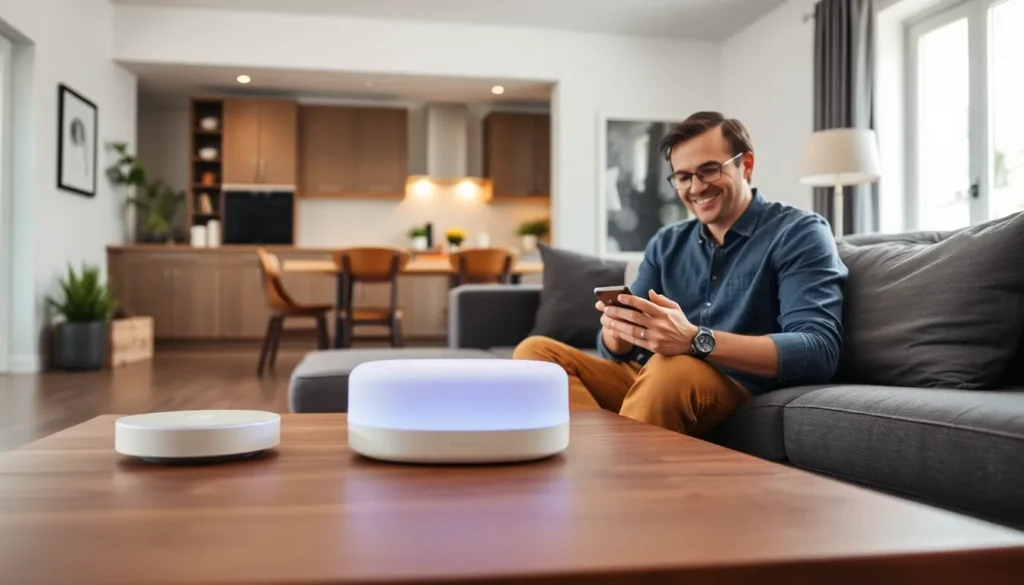
Wireless home integration offers numerous advantages that enhance everyday living. It simplifies the management of various aspects of a home, making life more convenient and efficient.
Convenience and Accessibility
Smart home technology improves everyday tasks significantly. Homeowners control systems like lighting and security through smartphones or voice commands, eliminating the need for manual adjustments. Tasks such as locking doors or adjusting thermostats become seamless. Additionally, sensors detect activity, automatically adjusting settings based on presence. For individuals with mobility limitations, voice control features boost accessibility, making it easier to interact with multiple devices. Such integration transforms the home into a responsive environment, ensuring everything operates in harmony.
Energy Efficiency
Energy efficiency stands out as a key benefit of wireless home integration. Smart thermostats learn household routines, optimizing heating and cooling for maximum efficiency, which can reduce energy costs by 10 to 15 percent. Automated lighting systems adjust brightness according to natural light levels, further saving power. Devices such as smart appliances can be programmed to run during off-peak hours, lowering utility bills. This reduction in energy consumption not only saves money but also contributes positively to the environment. Overall, the capacity to monitor and manage energy usage effectively creates a sustainable living space.
Key Technologies In Wireless Home Integration
Wireless home integration relies on advanced technologies that enable seamless connections and control over smart devices throughout a home. These technologies enhance convenience, security, and energy efficiency.
Smart Devices
Smart devices form the backbone of wireless home integration. They include smart thermostats, lighting systems, and security cameras among others. Innovative features like automated temperature adjustments and remote monitoring capabilities deliver enhanced comfort and security. In addition, smart appliances such as refrigerators and ovens provide conveniences like inventory tracking and remote preheating. Homeowners experience a more personalized environment thanks to these devices responding to user preferences and habits. Furthermore, entertainment devices allow users to enjoy music and video seamlessly through centralized control.
Communication Protocols
Communication protocols facilitate the interaction among various smart devices. Notable examples include Wi-Fi, Zigbee, and Z-Wave, each serving unique functions. Wi-Fi connects devices to the internet for remote access via smartphones or voice commands. Zigbee and Z-Wave offer reliable short-range connections, ideal for low-power devices spread throughout a home. Compatibility among devices is crucial, ensuring homeowners maximize functionality while creating a cohesive home network. The effectiveness of these protocols enhances the overall user experience, allowing for smooth operations and responsive control throughout the smart home environment.
Challenges Of Wireless Home Integration
Wireless home integration faces several challenges that can impact user experience. Among these concerns, security poses significant risks for homeowners.
Security Concerns
Security vulnerabilities arise from various smart devices connected to the network. Hackers exploit weak passwords and unencrypted signals to gain unauthorized access. Security breaches can lead to unauthorized control over systems like locks and cameras. Users often remain unaware of potential risks, amplifying the danger. Regular software updates and strong password practices significantly reduce these risks. Homeowners must remain vigilant, ensuring that devices have the latest security features. Implementing multi-factor authentication enhances security further, providing an additional layer of protection.
Compatibility Issues
Compatibility issues frequently occur with devices from different manufacturers. Device interoperability affects seamless communication and functionality. Many products utilize varying communication protocols, making integration challenging. Not all devices support Wi-Fi, Zigbee, or Z-Wave, which can complicate setups. Homeowners frequently encounter limitations that prevent them from achieving a cohesive smart home environment. Ensuring compatibility during device selection helps avoid these issues. Comprehensive research on devices and manufacturers supports better integration choices, leading to a more effective home setup.
Future Trends In Wireless Home Integration
Emerging technologies will reshape wireless home integration significantly over the next few years. Artificial intelligence (AI) plays a central role, allowing smart systems to learn from user behaviors and preferences. Enhanced machine learning algorithms can optimize energy usage, improving efficiency by an estimated 20 percent.
Voice control capabilities continue to evolve, incorporating natural language processing for improved user interaction. As these systems become more intuitive, homeowners find managing devices more straightforward. Integration of augmented reality (AR) and virtual reality (VR) technologies opens new avenues, enabling users to visualize changes before implementing them.
5G technology will facilitate faster communication among devices, leading to lower latency and more reliable interactions. As it becomes more prevalent, smart home devices can operate seamlessly, enhancing connectivity and responsiveness. Users can expect devices to communicate effortlessly with each other, creating a truly integrated living environment.
Modular smart home systems are gaining popularity, allowing for easy upgrades and additions. Homeowners appreciate the flexibility to customize their setups according to personal needs. Compatibility among various manufacturers remains a critical focus, encouraging collaboration to achieve cohesive smart ecosystems.
Both security and privacy concerns are prompting advancements in encryption and authentication methods. Enhanced security protocols will provide peace of mind, addressing vulnerabilities associated with connected devices. Industry standards are expected to emerge, ensuring safer smart home integration.
Sustainability also drives innovation in wireless home integration. Companies increasingly design energy-efficient products, reducing carbon footprints while conserving resources. The trend toward eco-friendly technologies aligns with growing consumer awareness about environmental impacts.
Overall, these trends signify a shift toward more sophisticated, user-friendly, and secure smart homes. The integration of cutting-edge technologies will continuously transform how homeowners interact with their living environments.
Wireless home integration represents a significant leap toward creating smarter and more efficient living spaces. As technology continues to evolve homeowners can expect even greater convenience and control over their environments. The integration of AI and 5G will further enhance device communication and energy management making homes not only smarter but also more sustainable.
With the right setup and consideration of compatibility and security, homeowners can enjoy a seamless experience that caters to their needs. Embracing these innovations will not only simplify daily tasks but also contribute to a more connected and responsive lifestyle. The future of home living is here and it promises to be more intuitive than ever.